18 AUGUST 2026·12 MIN READ
Breathwork & Caffeine: Timing, Dosage & Effects
Caffeine is the most widely consumed psychoactive substance in the world, and breathwork is a practice that deliberately influences the nervous system. Combine the two carelessly and you can end up wired, anxious and tingling all over. Combine them consciously and caffeine becomes a precise tool — for focus, endurance, or for getting out of your own way.
In this comprehensive article we look at the biochemical mechanisms, the effects on different breathing styles, the special case of caffeine tolerance, a comparison of the different caffeine sources (coffee, tea, etc.) and concrete dosage recommendations.
1. Biochemistry under the microscope: what caffeine does in the body
To understand the interaction with breathwork it is worth looking at the physiology of caffeine. Almost every one of its effects acts on exactly the same levers that breathwork also moves:
- Blockade of adenosine receptors: As an antagonist, caffeine occupies the receptors of the sleep messenger adenosine. The body does not create "real" energy — it simply stops perceiving fatigue.
- Activation of the sympathetic nervous system: With the tiredness signal missing, the adrenal glands release more stress hormones such as adrenaline and noradrenaline. Heart rate and stroke volume rise; the nervous system shifts into fight-or-flight mode.
- Increased respiratory drive: Caffeine is a mild respiratory stimulant. It raises the sensitivity of the brainstem's respiratory centre to CO₂. The result: you breathe slightly faster and deeper without noticing.
- Bronchodilation (widening of the airways): As a methylxanthine, caffeine relaxes the smooth muscle of the bronchi, which slightly eases oxygen uptake in the alveoli.
- Cerebral vasoconstriction: In the brain, caffeine narrows the blood vessels, so cranial blood flow drops slightly — biochemically the very same direction of effect as intense over-breathing (hyperventilation).
- Increased muscle tension & dehydration: Mildly diuretic; subtly raises baseline tone in the jaw, neck and shoulder muscles.
- Long half-life: In a healthy adult the half-life is roughly 5 to 6 hours. The afternoon coffee is therefore still half-active in the bloodstream during an evening session.
2. Caffeine across different breathwork styles
Depending on the goal of a breathing practice, caffeine can either act as a valuable synergist or as a major disruptor.
A) Calming & regulating breathwork
Examples: Box Breathing, Coherent Breathing (5–6 breaths/min), the 4-7-8 method.
The goal: activating the parasympathetic nervous system ("rest & digest"), slowing the heart rate, stimulating the vagus nerve and lowering stress levels.
⚠️ The challenge: Caffeine acts as a direct antagonist to the vagus nerve. Because of the adrenaline release you are physiologically braking against a raised sympathetic baseline.
💡 The functional advantage (caffeine buffering): If you suffer from inner restlessness, palpitations or the typical caffeine jitters after a coffee, calming breathwork can be used as a natural regulator. Three to five minutes of slow, rhythmic breathing with an extended exhale stimulate the vagus nerve and catch the overshooting stress response.
👉 Bottom line: Better to skip caffeine beforehand — but as an antidote afterwards the combination works remarkably well.
B) Focus, performance & apnoea
Examples: Kapalabhati, Bhastrika, the Wim Hof Method (retentions), pre-workout breathing.
The goal: improved oxygen supply, mental sharpness, building energy or preparing for peak physical performance.
💡 The synergies & benefits:
- Cumulative focus boost: Taking a moderate dose of caffeine in combination with activating breathwork amplifies dopamine and adrenaline signalling. You reach maximum mental sharpness with a noticeably lower caffeine dose.
- Expanded breathing capacity: Through the bronchodilating effect of caffeine the airways open. Practised before sport, it lowers the perceived exertion of the breathing muscles.
⚠️ Limitation with breath holds: Caffeine raises the basal metabolic rate and the oxygen consumption of the cells. The brain also reacts more sensitively to CO₂. The result: the urge to breathe sets in much earlier during breath holds; comfortable retention times shorten noticeably.
🚫 IMPORTANT WARNING regarding cold exposure (ice baths / Wim Hof): No caffeine should be consumed before combining breathwork with cold water immersion (ice bath)! The stacked cardiovascular load of vasoconstriction, cold shock reflex and adrenaline puts extreme strain on the cardiovascular system. More on the method here. Read the full Breathwork Contraindications before combining cold exposure with intensive breathing.
👉 Bottom line: A moderate dose (roughly 50–100 mg) works well — but stay caffeine-free for breath holds and cold exposure.
C) High-ventilation breathwork
Examples: Rebirthing Breathwork, Holotropic Breathwork, Conscious Connected Breathing.
The goal: continuous, circular breathing without pauses leads to increased exhalation of CO₂ (respiratory alkalosis). This dampens activity in the prefrontal cortex and opens access to deep-seated emotions, somatic memories and expanded states of consciousness. More about this in the article: what respiratory alkalosis is.
🚨 Why strict caution is required here:
- Risk of overstimulation: The nervous system already starts from a raised level of arousal. This can quickly lead to emotional overload or a nervous-system crash.
- Amplification of tetany (muscle cramps): Respiratory alkalosis changes the freely available calcium in the blood and causes neuromuscular hyperexcitability (e.g. cramped hands or jaw pressure). Caffeine considerably intensifies these neural discharges and cramps.
- Increased anxiety & panic potential: The combination of hyperventilation and an already elevated adrenaline level is easily misinterpreted by the body as a real threat — a panic reaction can be triggered.
- Blocked surrender: The therapeutic value of rebirthing lies in handing over control. Caffeine, however, promotes hypervigilance and rational mental activity; the mental protective wall stays harder to penetrate.
👉 Bottom line: Stay caffeine-free on session day — ideally for at least 6–8 hours beforehand.
3. The special case of caffeine tolerance: what applies to habitual drinkers?
Anyone drinking 2 to 3 cups of coffee a day develops tolerance: in response to the permanent blockade, the brain builds more adenosine receptors (up-regulation).
Physiological reality:
Habitual consumers often no longer feel a racing heart. Biochemically, however, caffeine still triggers sympathetic activation and vasoconstriction. The baseline tone of the nervous system stays elevated.
The withdrawal dilemma:
Anyone who abruptly gives up caffeine before an evening rebirthing session often suffers from diffuse withdrawal headaches, brain fog and irritability (caused by the sudden dilation of the cerebral vessels). A pounding head makes the journey just as difficult as overstimulation.
The right strategy for tolerant people:
- For rebirthing / high ventilation: Do not torture yourself cold turkey — instead take a minimal dose early in the morning on the day of the session (e.g. half a cup of coffee or green tea at least 6 hours before). This avoids withdrawal headaches without over-stimulating the nervous system for the journey later.
4. The big plant comparison: coffee, tea, mate, guayusa, guarana, kola nut & cacao
Not all caffeine acts the same. The accompanying plant compounds drastically change how it is absorbed:
| Plant | Effect profile | Rating for breathwork |
|---|---|---|
| Coffee (Coffea arabica / robusta) | Fast peak, no buffer | High risk of jitters/restlessness |
| Tea (Camellia sinensis) | Caffeine + L-theanine | Gentle, focused alertness |
| Mate (Ilex paraguariensis) | Caffeine + theobromine | Heart-opening & sustained |
| Guayusa (Ilex guayusa) | Caffeine + L-theanine + theobromine/theophylline | Maximum buffer & perfect synergy |
| Guarana (Paullinia cupana) | Caffeine bound to tannins (depot) | Stable plateau, but long duration |
| Kola nut (Cola nitida / acuminata) | Caffeine + theobromine, bound to polyphenols | Opens the airways, but dose low |
| Cacao (Theobroma cacao) | Very little caffeine, lots of theobromine | Gently heart-opening, ideal before breath journeys |
The most important caffeine-containing plants at a glance:
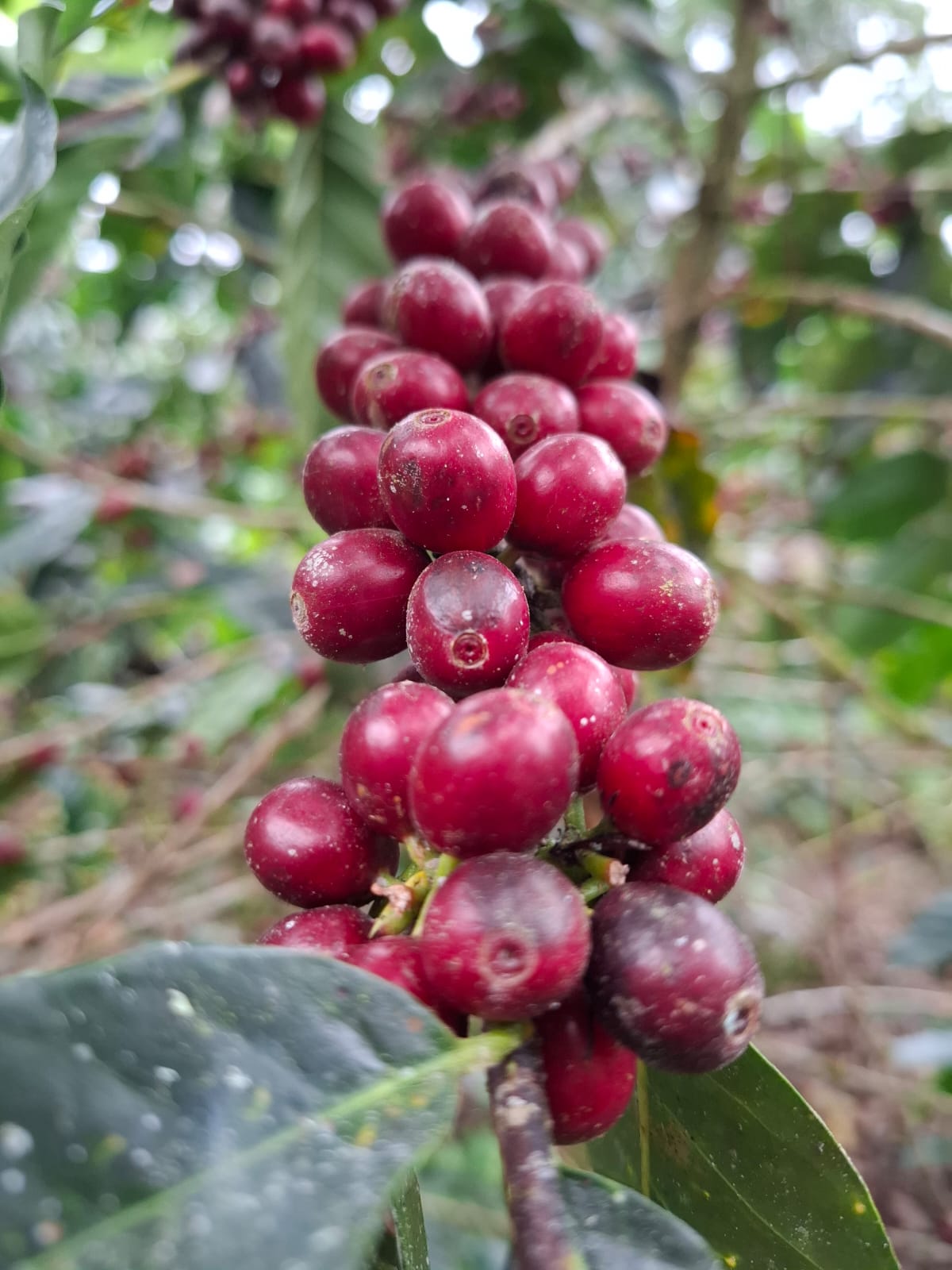
☕ Coffee shrub (Coffea arabica / Coffea canephora "Robusta") (~95 mg caffeine / cup)
 AI-generated image
Plant part: seeds (coffee beans) inside the coffee cherry. Caffeine content: ~1.0–2.5 % of dry matter (arabica ~1.2 %, robusta ~2.2 % — almost double).
Character: Fastest onset, steepest peak, most acid-forming. The caffeine is present in free, unbound form — there is no natural buffer. Roasting creates the aroma; the caffeine content stays largely heat-stable.
Preparation: Filter coffee delivers around 80–120 mg of caffeine per cup (~200 ml), but more slowly and evenly. An espresso shot contains only ~60–80 mg, yet acts very fast and steeply because of the small volume. Cold brew is often considerably higher (up to 200 mg) but gentler on the stomach. For breathwork a small filter coffee is the most tolerable option.
Rating for breathwork: Least suitable. Most likely to cause trembling, palpitations and stomach unrest.
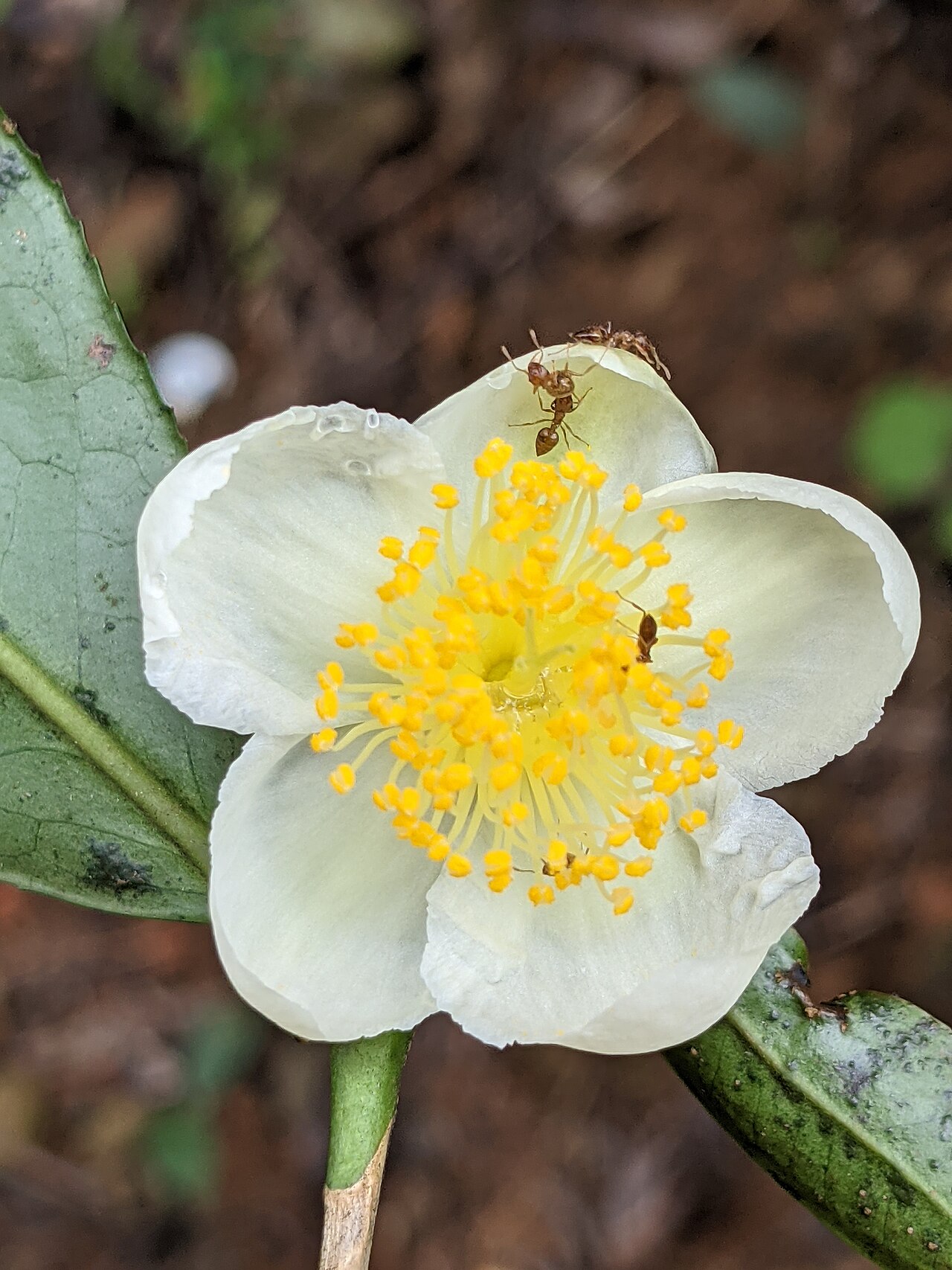
🍵 Tea plant (Camellia sinensis) (~30–70 mg caffeine / serving)
 AI-generated image
Plant part: young leaves, leaf buds and stems. Caffeine content: ~2.0–5.0 % of dry matter.
Character: Contains 20–40 mg of L-theanine (an amino acid that promotes alpha waves in the brain) as well as tannins and catechins (e.g. EGCG) that release the caffeine with a delay. Historically this caffeine was called "theine" — chemically it is the identical molecule.
Preparation: Green and white tea are unfermented or minimally oxidised (infusion ~30–50 mg), mild and rich in theanine. Black tea and oolong are fully or partly oxidised (~40–60 mg), stronger in aroma and easier on the stomach. Matcha (shaded tencha leaves, de-veined and stone-ground into powder, ~60–70 mg) acts most strongly and longest because the whole leaf is consumed — the maximum dose of caffeine, L-theanine and antioxidants. Rule of thumb: a short steep = more caffeine, a long steep = more tannins and therefore a gentler effect.
Rating for breathwork: Very well suited. L-theanine slows caffeine absorption and takes the edge off the stimulation. The result is relaxed, clear attention (calm alertness).
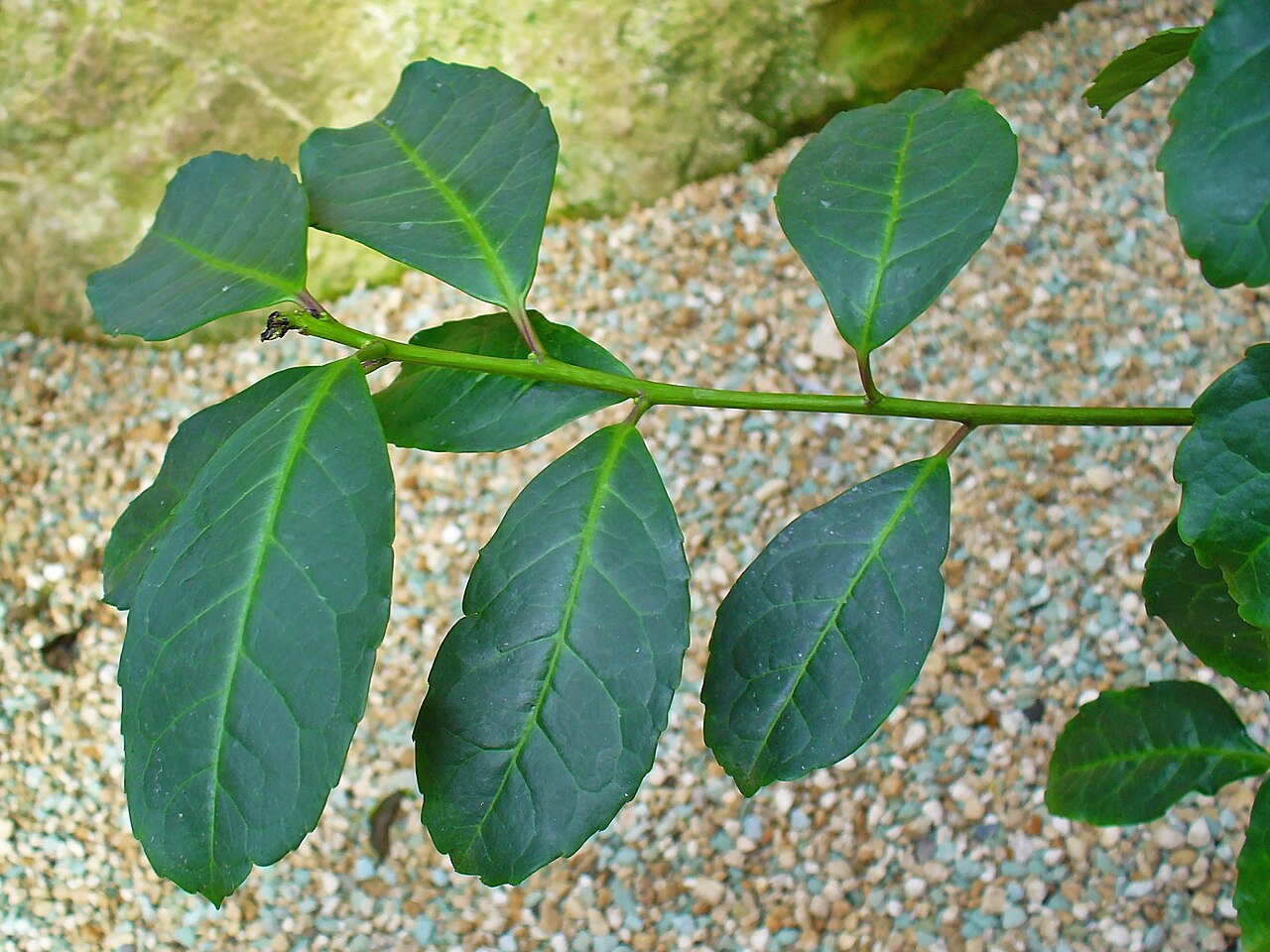
🧉 Mate shrub (Ilex paraguariensis) (~80 mg caffeine / cup)
 AI-generated image
Plant part: dried, chopped leaves and twigs. Caffeine content: ~0.5–1.5 % of dry matter.
Character: A traditional South American infusion. It additionally contains theobromine — the same heart-stimulating, mildly vasodilating compound found in ceremonial raw cacao — plus protective flavonoids.
Rating for breathwork: Well suited to longer, activating breathing practices. Warming, sustained, and gently supportive of the circulation.
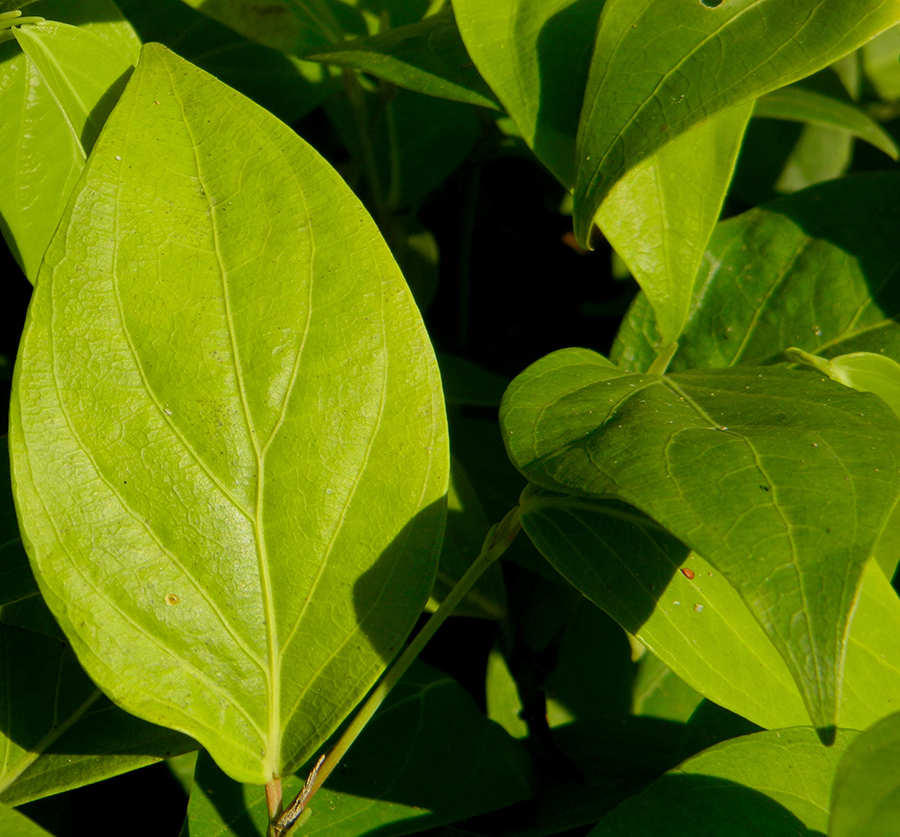
🍃 Guayusa (Ilex guayusa) (~90 mg caffeine / cup)
 AI-generated image
Plant part: leaves of an Amazonian holly native to the lowlands of Ecuador, closely related to mate. Caffeine content: ~1.5–3.5 % of dry matter.
Character: Combines caffeine with L-theanine, theobromine, theophylline and valuable antioxidants. Completely free of bitter tannins — which makes for long-lasting, stomach-friendly stimulation.
Rating for breathwork: The absolute favourite. Guayusa is traditionally drunk before dawn by the Kichwa communities of South America to enter a state of awake, calm presence. Its broad buffer profile makes it the most tolerable caffeine source for breathing practice.
Curious about guayusa? GUYA is one of our Curated Partners — use the code BREATHCHILL for 10% off: Visit Drink GUYA →
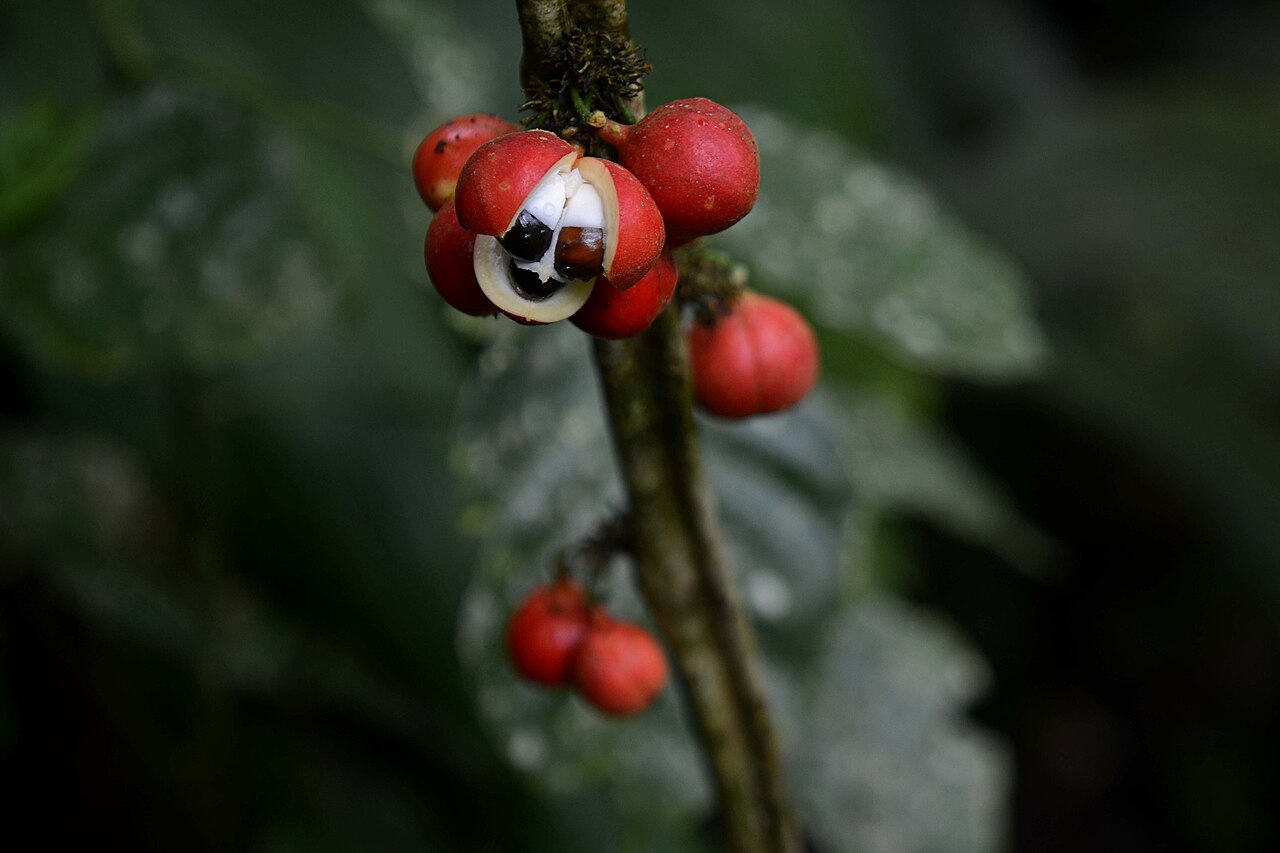
🌰 Guaraná (Paullinia cupana) (~40–80 mg caffeine / serving)
 AI-generated image
Plant part: seeds of a South American liana. Caffeine content: ~3.0–7.0 % — the highest known value among all crop plants.
Character: The caffeine is bound to complex tannins and fats and is only released with a delay in the gastrointestinal tract. The result: slow absorption and an hours-long plateau instead of an adrenaline peak.
Rating for breathwork: Conditionally suitable. For gentle and focusing techniques (Coherent Breathing, Box Breathing) guarana provides a stable plateau of wakefulness without nervousness. Before high-ventilation formats caution is needed: the total dose stays high and keeps neural excitability elevated for hours — the risk of tetany and a raised heart rate increases.
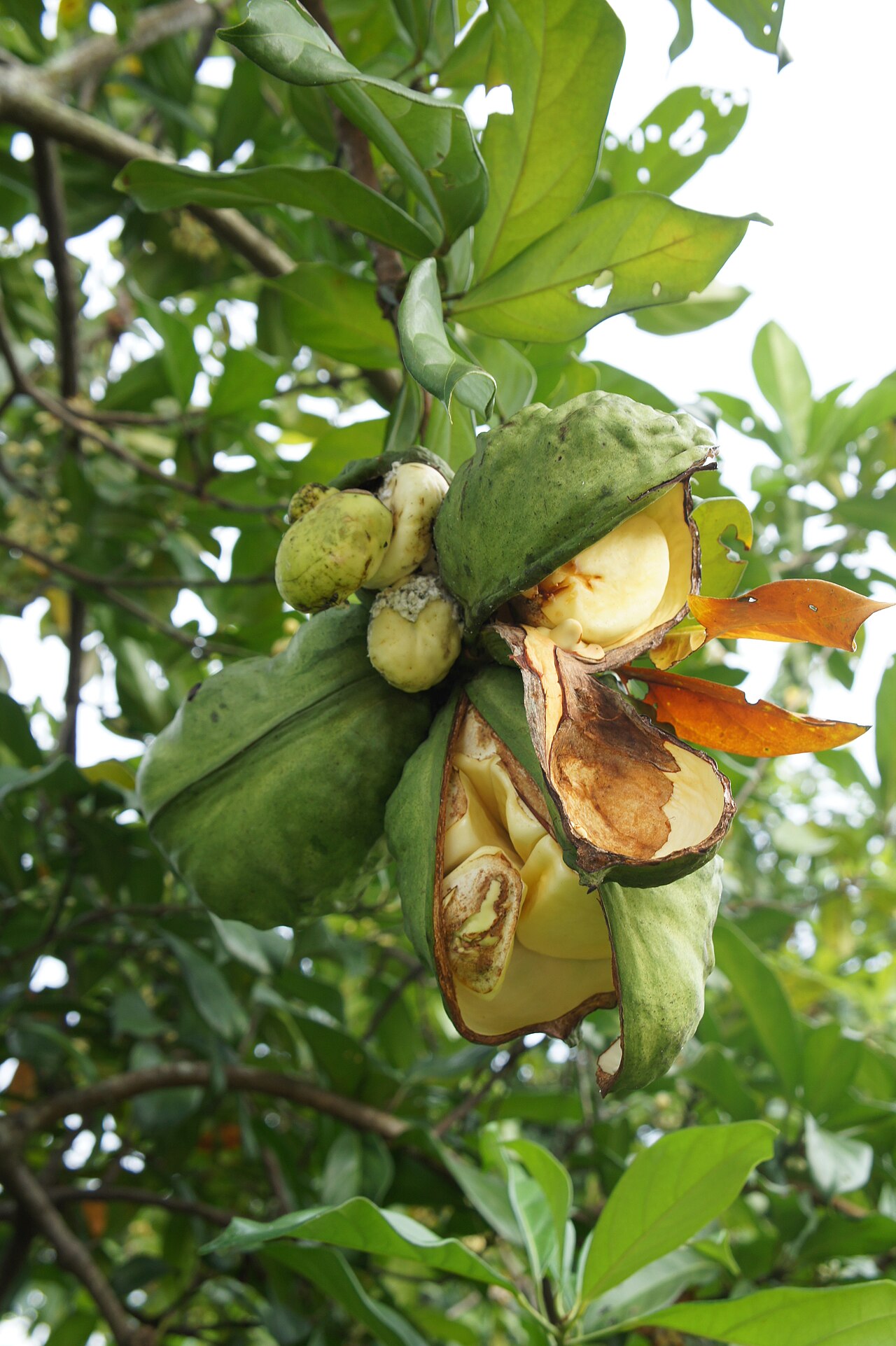
🌳 Kola tree (Cola nitida / Cola acuminata) (~20–40 mg caffeine / nut)
 AI-generated image
Plant part: seeds (kola nut). Caffeine content: ~1.5–2.5 % of dry matter. Historically the name-giving caffeine and flavour source for cola soft drinks.
Character: Combines caffeine with theobromine — the main active compound of ceremonial cacao. Theobromine acts as a mild vasodilator and bronchodilator, while the caffeine bound to polyphenols is absorbed more slowly.
Rating for breathwork: Conditionally suitable. The bronchodilating effect can physically ease deeper, effortless inhalation, and the combination creates an awake, mood-brightening presence. In higher doses, however, kola nut noticeably stimulates the cardiovascular system — before intensive connected breathing it should be dosed very low.
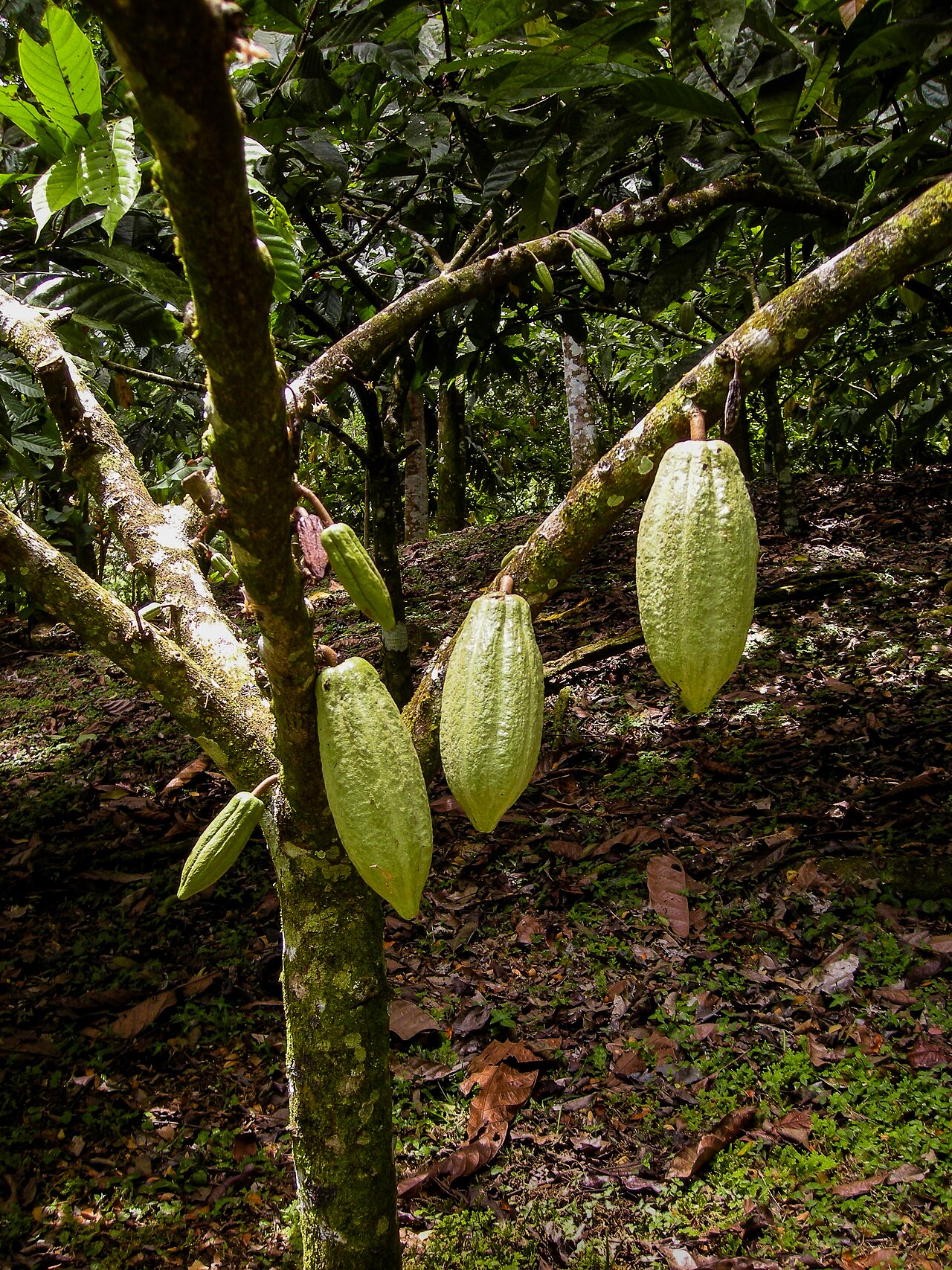
🍫 Cacao tree (Theobroma cacao) (~5–30 mg caffeine / serving)
 AI-generated image
Plant part: fermented and dried cacao beans. Caffeine content: only ~0.1–0.7 % — it rises with the cacao percentage (dark chocolate contains far more than milk chocolate).
Character: The primary active ingredient is not caffeine but the related alkaloid theobromine: gentler, longer-lasting, vasodilating instead of vasoconstricting. More about this in the article about cacao and breathwork.
Rating for breathwork: Very well suited. Ceremonial raw cacao opens the heart and the airways without strongly activating the adrenaline axis — the one "caffeine plant" that also works before deep breath journeys.
Looking for high-quality raw cacao? I recommend Good Mood Food — use the code GOODMOODDEALS for 10% off: Shop Good Mood Food →
Clear conclusion & ranking of caffeine sources for breathwork
- Optimal (synergistic & gentle): Guayusa, mate and tea. They deliver caffeine together with the amino acid L-theanine, which creates sustained, calm alertness without adrenaline spikes.
- Conditionally suitable (depot effect): Guarana & kola nut — no steep adrenaline spikes, but because of the long half-life and high potency they need careful dosing before high-ventilation formats.
- Rather unsuitable before intensive breath journeys: Coffee & energy drinks — they create rapid adrenaline spikes, flatten the breath and encourage tetany as well as inner restlessness.
5. Practical dosage guidelines & biohacks
Recommended dosage by type of practice:
- Activating breathwork (pre-sport / morning kick): max. 50–100 mg of caffeine (approx. 1 cup of tea or guayusa) 45–60 minutes before the practice.
- Technical breathwork & pranayama: max. 30–70 mg of caffeine (e.g. a light tea).
- Deep release / rebirthing / holotropic: no caffeine on the day of the session (or a minimal dose early in the morning if tolerance is high).
- Cold exposure / ice bathing: best to avoid caffeine entirely.
Safety ceiling: do not exceed 400 mg of caffeine per day in total and 200 mg in a single serving. If you are caffeine-sensitive, pregnant, on stimulant medication, or living with anxiety or a heart condition, halve those numbers and read our breathwork contraindications and safety guide.
Additional biohacks against cramps & restlessness:
- Add L-theanine: If you drink coffee, you can take 100–200 mg of L-theanine alongside it to cushion the restlessness peaks.
- Electrolytes & magnesium: Because fast breathing and caffeine both draw on minerals, a pinch of sea salt in water or taking magnesium before the session significantly reduces the risk of muscle cramps (tetany).
- Hydration: Both caffeine and intense mouth breathing dry out the mucous membranes. Drink enough plain water before and after the session.
6. FAQ – frequently asked questions
- Can I drink coffee before a rebirthing session? No, it is best to skip it completely on the day of the session. If you have a strong caffeine tolerance, take only a minimal dose at least 6 hours beforehand to avoid withdrawal headaches.
- Does caffeine make muscle cramps (tetany) worse during breathing? Yes. Exhaling CO₂ changes the available calcium in the blood. As a CNS stimulant, caffeine additionally raises neural excitability, so cramps in the hands and face appear earlier and more intensely.
- Which caffeine source suits breathwork best? Guayusa, mate and tea. They deliver caffeine together with the amino acid L-theanine, which creates sustained, calm alertness without adrenaline spikes.
- Can breathwork replace my morning coffee? In many cases yes. Just 5 minutes of dynamic breathing (e.g. Kapalabhati or circular breathing) sustainably increase oxygen supply and circulation — with no adenosine debt or adrenaline crash.
7. Conclusion & safety note
Caffeine is neither fundamentally good nor bad for breathwork — it is directional. It pushes the nervous system towards activation. That is highly functional when focus and athletic performance are needed, but counterproductive when it comes to letting go, relaxing and somatic processing. Always choose dose, timing and caffeine source to match the breathing format you want to practise.
Important note: intensive high-ventilation breathwork such as rebirthing strongly affects the cardiovascular system and brain chemistry. People with cardiovascular disease, untreated high blood pressure, epilepsy, pregnancy or a tendency towards panic attacks should consult medical professionals before practising and work with experienced facilitators.
If you want to experience conscious connected breathing in a safe, held space, have a look at the upcoming sessions.
Ready to experience Breathwork for yourself?
Take the private 2-minute check to see whether breathwork may be suitable for you right now.
Explore the next Breathwork Group Sessions in Berlin and find a date that works for you.
Talk with me for 15 minutes, without obligation, and explore which kind of support may fit you.