31 JULY 2026·7 MIN READ
What is Rebirthing Breathwork? A Comprehensive Introduction for Beginners
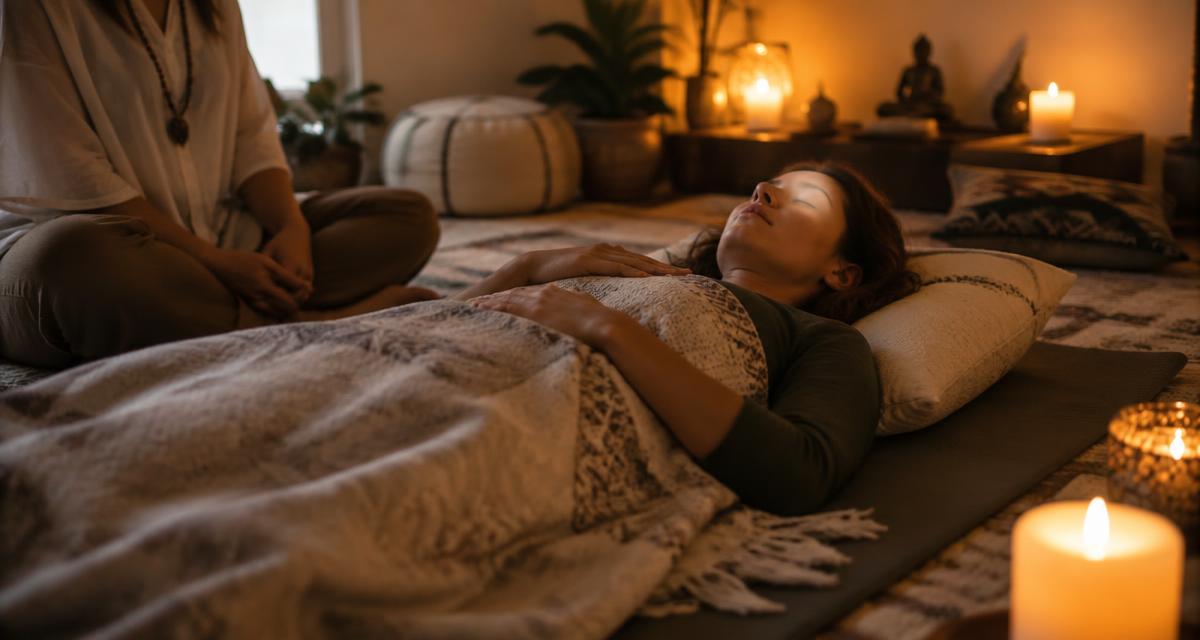 AI-generated image
Rebirthing Breathwork is a conscious connected breathing practice in which you breathe in a continuous circle — no pause between the inhale and the exhale — for an extended period, usually around an hour. That simple change in breathing pattern shifts your physiology and your state of consciousness, and many people experience stress, held-back feelings and held tension surfacing and easing.
Developed in the 1970s by Leonard Orr, it is one of the original conscious connected breathing methods and a direct ancestor of most modern high-ventilation breathwork. By flooding the body with air and life-force energy, it bypasses the analytical mind and works directly on the nervous system. It can help release stuck mental-emotional patterns and conditioning, induce elevated states of consciousness, and reveal deep insight into your life. Many people describe it as one of the most transformative experiences of their life.
Where Rebirthing Comes From
Leonard Orr began developing the method in California in the 1970s, initially in warm water, after noticing that sustained connected breathing brought people into vivid, cathartic states. He called it "rebirthing" because participants frequently contacted very early, pre-verbal material — including impressions around their own birth.
You do not need to believe anything about birth memory for the practice to work. The name is historical; the mechanism is the breath. Today the same family of practices appears under several names:
- Conscious Connected Breathing — the neutral, descriptive term for the technique itself.
- Rebirthing Breathwork — Orr's lineage, typically one-to-one, gentle in pace, with strong emphasis on relaxation on the exhale.
- Holotropic Breathwork — Stanislav Grof's group format, faster, louder, with music and a sitter.
If you want the physiology behind all of these, read the Wim Hof Method explained. For a map of every technique we cover, see the Ultimate Breathwork Guide.
How Does It Work?
- Our bodies store the imprints of everything we have been through — including early childhood experiences and subconscious patterns formed during birth (hence the name "Rebirthing"). By consciously connecting the breath, you access these cellular memories and release old trauma and limiting beliefs without needing to analytically dissect them.
- The breath acts as a bridge between the conscious and the unconscious, between mind and body. As you breathe deeply you raise the level of pranic or chi energy in your system. Many people experience this as a release of held tension.
- Rebirthing works on the principle that there is a direct connection between the mental, physical and energetic bodies. Relaxing the breath can help soften tension in body and mind. It is a powerful tool for shifting from chronic survival mode into authentic flow, clarity and presence.
What a 1-on-1 Session Looks Like
After an introduction to the technique and optional Q&A we usually explore the issues you want to work with, and any past trauma or condition you may want to release. We also discuss how you would like to be supported during the session.
You then begin the conscious breathing session, usually lying down. You learn to connect your breath so that there are no pauses between the inhale and the exhale. The inhalation is full and deep, the exhalation more passive and relaxed. Slowly you are guided to find your own rhythm — probably slightly faster and fuller than you are used to.
The active breathing phase lasts approximately one hour. A relaxation and integration phase of 20 to 30 minutes gives you time to return gently. In total, a Rebirthing Breathwork session takes around 2 to 3 hours.
What Does It Actually Feel Like?
Most first-timers are surprised by how physical it is. Common experiences include:
- Tingling in the hands, feet, face or lips — a normal effect of changing CO₂ levels.
- Tetany — temporary cramping or claw-like tightening of the hands. It is harmless and releases as you soften the breath.
- Temperature shifts — waves of heat or cold moving through the body.
- Emotional waves — joy, grief, anger, laughter, tears or deep peace, often without a story attached.
- Deep stillness — many sessions end in a profoundly quiet, spacious state.
You may laugh, cry or shake. Everything is welcome. Nothing has to happen for the session to be valuable — some of the most significant sessions are quiet ones.
Who It Is For — and Who It Isn't
Rebirthing Breathwork may suit adults who are curious about embodied self-exploration and want a facilitated way to meet stress, emotion, grief, creative stuckness or recurring patterns. You do not need previous breathwork, fitness or meditation experience, but you do need to feel able to stay in contact with your body, communicate your boundaries and slow down or stop when needed.
It is not the right first step for someone seeking psychotherapy, medical treatment or support during an acute psychiatric crisis. It does not replace care from a doctor or therapist, and people with any contraindication should seek medical guidance and discuss a gentler or different practice with an experienced facilitator.
If you are weighing it against a stillness practice, breathwork vs. meditation lays out the difference.
Preparing for Your First Session
Eat lightly and leave roughly two to three hours after a larger meal, wear loose layers, bring water and avoid arriving rushed. An open intention can be useful, but you do not need to force a goal or a particular experience. Keep some unhurried time free afterwards so you can hydrate, eat, rest and notice what continues to settle. The separate guide to before and after the session covers preparation, grounding, journaling and the 48-to-72-hour integration window in detail.
How Often Should You Practise?
Rebirthing is traditionally taught as a series rather than a one-off. Ten sessions is the classic arc: the first few teach your body the breath, the middle ones do the deeper clearing, and the later ones consolidate. A common rhythm is one session every one to two weeks.
What you do around the session matters as much as the session itself. Rest, hydration, light food and unhurried time afterwards let the process settle — see before and after the session for practical guidance.
Safety and Contraindications
Rebirthing Breathwork is a high-ventilation practice that produces real physiological change. It is not suitable for everyone. Cardiovascular conditions, epilepsy or seizure history, aneurysm, uncontrolled high blood pressure, glaucoma, retinal detachment, recent surgery, pregnancy, and psychiatric conditions such as psychosis or bipolar disorder are all reasons to speak with a doctor first and to work only with an experienced facilitator.
Please read the full guide to breathwork contraindications before practising, and never do intense connected breathing in or near water, or while driving.
Frequently Asked Questions
Is Rebirthing Breathwork safe?
For healthy adults working with a trained facilitator, yes. The sensations it produces — tingling, tetany, emotional release — can be intense but are usually self-limiting. Safety depends on screening: the contraindications above are real, and a good facilitator will ask about them before you start.
Do I need any experience to try it?
No. The technique is simple enough to learn in a few minutes, and a first session is fully guided. No fitness, flexibility or meditation background is required.
How is the Rebirthing breathing technique practised?
You breathe in a relaxed, continuous circle without a deliberate pause between inhale and exhale. The inhale is usually fuller and active, while the exhale is allowed to release without force. A facilitator helps you find a sustainable rhythm, notice tension and slow or stop when needed; the active breathing phase is followed by rest and integration.
Is this just hyperventilating?
Mechanically it is a form of voluntary over-breathing, and it does lower CO₂ — the same chemistry described in respiratory alkalosis. The difference is that it is intentional, paced, time-limited and held in a supported setting, rather than an involuntary panic response.
Should I start with a 1:1 or a group session?
A one-to-one session gives you individual attention and space to work with specific material, which can make it a supportive first step. Group sessions offer a shared setting and may suit people who feel comfortable exploring the breath alongside others.
Can I practise Rebirthing Breathwork alone at home?
Beginners should learn the method with a trained facilitator who can screen for contraindications, explain the physiological effects and help adjust the pace. Intense connected breathing should never be practised alone in water, while driving or anywhere a loss of awareness could be dangerous. After guided experience, some people use gentler connected breathing independently, but safety and medical guidance still come first.
How many sessions do I need?
One session can introduce you to the practice. Some people return for a series to become more familiar with the breath and give insights time to integrate; there is no required number.
Is Rebirthing therapy the same as Rebirthing Breathwork?
The terms are sometimes used interchangeably online, but Rebirthing Breathwork is best described as a facilitated breathing and self-exploration practice, not psychotherapy. It does not diagnose or treat mental-health conditions and is not a substitute for care from a licensed therapist, doctor or other qualified professional.
Who was Leonard Orr, and how did Rebirthing begin?
Leonard Orr was an American teacher who developed Rebirthing in the 1970s after exploring sustained connected breathing, initially in warm water and later on dry land. His interpretations included ideas about birth memories and life energy; these are part of the method's history, not established scientific facts. The enduring practical element is its relaxed, connected breathing pattern.
Curious to experience Breathwork for yourself?
Take the private 2-minute check to see whether breathwork may be suitable for you right now.
Explore the next Breathwork Group Sessions in Berlin and find a date that works for you.
Talk with me for 15 minutes, without obligation, and explore which kind of support may fit you.
Breath & Chill Newsletter
Occasional updates on upcoming Events, new Breathwork Blog Articles and gentle reminders to take a deep breath. No spam, unsubscribe anytime.