18 SEPTEMBER 2026·6 MIN READ
Chanting, Singing & the Breath: Why Your Voice Is a Built-In Breathwork Tool
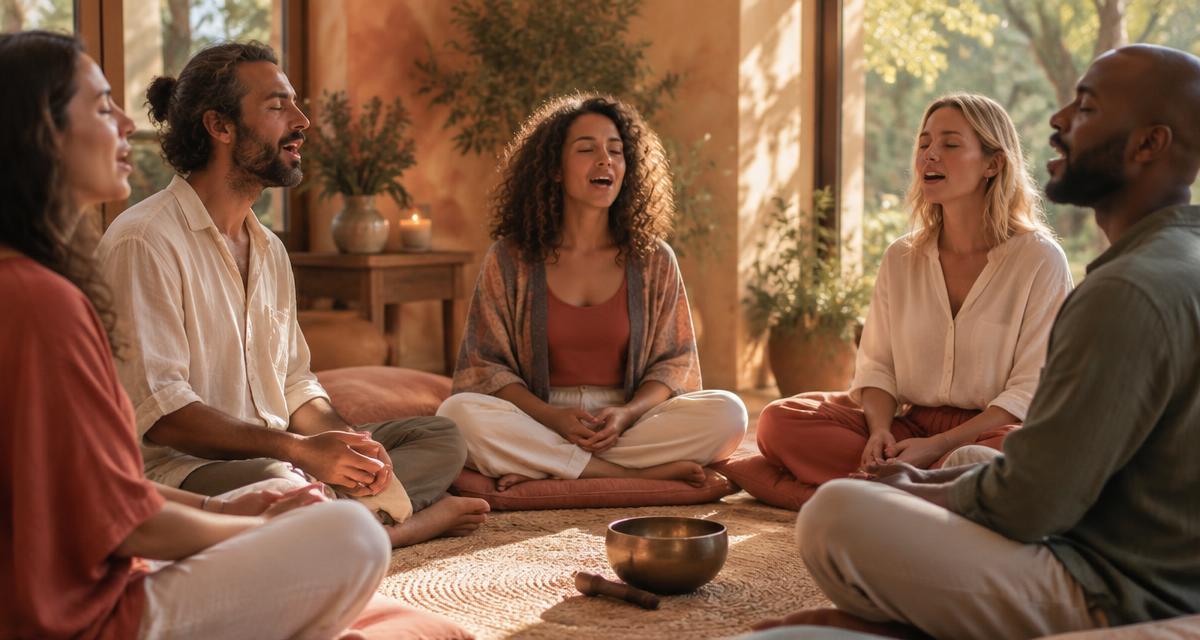
You do not need a cushion, a facilitator, or a breathing technique to train your nervous system. If you have ever sung in a choir, chanted Om in a yoga class, or hummed in the car, you were doing breathwork — whether you called it that or not.
Chanting and singing are, physiologically speaking, structured breathing. Every sustained tone is a long, controlled exhale. Every pause for breath is a full, deep inhale. The voice simply gives the breath a melody — and the body responds with the same shifts that slow breathing produces: calmer heart rate, higher heart-rate variability, and a nervous system sliding toward rest.
The Shared Mechanism: A Long, Controlled Exhale
A tone needs a steady stream of air. You cannot sing or chant with short, choppy exhales — the sound falls apart. So the body automatically does what every down-regulating breath technique teaches: it extends the exhale and keeps it slow and even.
That extended exhale is the single most reliable lever for calming the nervous system. Heart rate rises slightly on the inhale and falls on the exhale; the longer the exhale, the stronger the braking signal the vagus nerve delivers to the heart. This is the same principle behind the practices in breathwork for stress relief and breathwork for sleep — chanting and singing just add vibration and sound on top.
There is a second, quieter mechanism: resonance. The vocal cords sit close to the vagus nerve, and the vibration of a sustained tone mechanically stimulates it. Humming amplifies this — humming through the nose increases nitric oxide in the nasal passages dramatically, which dilates airways and blood vessels and deepens the calming effect.
Mantra Chanting: Breath with a Rhythm
Traditional chanting — Om, kirtan, Gregorian chant, Buddhist sutras — tends to organize itself around a surprisingly consistent pace: roughly five to six breaths per minute. That is exactly the resonant, coherent-breathing frequency that maximizes heart-rate variability.
Researchers studying the Ave Maria and the Om mantra found that reciting them naturally settles breathing into this ~6 breaths-per-minute rhythm — without anyone trying to breathe slowly. The rhythm of the words does it for you.
Group chanting adds another layer: entrainment. When a room chants together, breathing synchronizes across the group. Heart rates and breathing rhythms begin to align, which is part of why kirtan feels so connecting — your nervous system is literally syncing with the people around you.
- Long vowel tones (Om, Aum, Amen) stretch one exhale over 10–20 seconds — a built-in extended exhale.
- Call-and-response kirtan creates effortless breath pacing: you sing, then breathe with the group.
- Humming (Bhramari, the 'bee breath') concentrates vibration in the skull and sinuses and is one of the fastest ways to settle acute anxiety.
Singing: Controlled Exhale Training with Benefits
Singing is breath training disguised as music. Singers learn diaphragmatic breathing, breath support, and long sustained phrases — the same skills breathwork teaches, practiced for years.
The research on group singing is striking: choir studies show singers' heart rates and heart-rate variability synchronize during songs, rising and falling together with the musical phrases. Regular singing is associated with improved lung capacity, better mood, and reduced stress markers. And singing together reliably increases feelings of social bonding — the combination of synchronized breath, shared rhythm, and joint sound appears to nudge the oxytocin system that underlies trust and connection.
None of this requires talent. The physiological effects show up in shower singers and car singers alike — because the mechanism is the breath, not the performance.
The Effects: What Changes When You Chant or Sing
Because chanting and singing work through the same levers as slow breathwork, the effects look familiar:
- Lower stress and calmer heart rate — extended exhales activate parasympathetic braking within minutes.
- Higher heart-rate variability — regular chanting or singing at resonant pace trains vagal tone over time.
- Better mood — rhythmic sound-making combines breath regulation with music's own reward pathways.
- Social connection — group singing and chanting synchronize breathing and heart rhythms across the room.
- Mild altered states — long kirtan or mantra sessions can produce a soft, trance-like absorption: time blurs, the inner narrator quiets. It is a gentler doorway than high-ventilation breathwork, but it is a real one.
Worth noting honestly: the effects of chanting and singing stay in a comfortable, down-regulating range. They calm, settle, and open — they do not usually surface the deep stored emotional material that connected breathing can reach.
What Breathwork Adds
If chanting and singing are breath training in a gentle register, breathwork extends the map in both directions. On one end you get precise tools for acute states — the physiological sigh for a spike of stress, coherent breathing for sleep. On the other end, conscious connected breathing — like Rebirthing Breathwork — sustains a deeper activation that can open emotional release and altered states far beyond what a song typically reaches.
Many facilitators actually combine them: a session often opens with humming or toning to settle the group, moves into connected breathing for the deep work, and closes with soft sound for integration. The voice and the breath have never really been separate practices.
For the full landscape of techniques and how to choose between them, see the Ultimate Breathwork Guide 2.0.
Three Practices to Try
- Humming exhale (5 minutes). Inhale through the nose, then hum for the entire exhale — any comfortable pitch, lips gently closed, feeling the vibration in the face and skull. Repeat. This is Bhramari, the bee breath, and it is remarkably effective for anxiety.
- One long Om per breath. Inhale fully, then chant Om (or any long vowel) for as long as the exhale comfortably lasts. Let the sound fade naturally before inhaling again. Ten rounds.
- Sing something, daily. In the car, in the shower, while cooking. Notice how your breathing slows and deepens after a few songs — that shift is the practice working.
Is It Safe?
Chanting, humming, and singing are among the safest nervous-system practices there are. They stay in the down-regulating range, involve no hyperventilation, and are suitable for almost everyone — including people for whom intense breathwork is not recommended. If breathing through a chant ever feels strained, simply return to normal breathing. The safety considerations that matter for intense practices are collected in breathwork contraindications; for chanting and singing, comfort is the only rule.
FAQ:
- Does chanting really change your breathing? Yes. Sustained tones require a long, controlled exhale, and rhythmic chants naturally settle breathing to about five to six breaths per minute — the same resonant pace that maximizes heart-rate variability.
- Is humming as effective as breathing exercises? For calming, often yes. Humming extends the exhale, stimulates the vagus nerve through vibration, and increases nasal nitric oxide — several calming mechanisms stacked into one simple practice.
- Do I have to be a good singer to get the benefits? No. The physiological effects come from the breathing pattern and vibration, not from how the result sounds. Shower singing counts.
- Can chanting replace breathwork? It covers the gentle, down-regulating end of the spectrum beautifully. For deeper emotional release or altered states, conscious connected breathing goes further — the two complement each other.
Curious what your breath can do beyond the voice?
If chanting and singing opened a door for you, a guided Rebirthing Breathwork session in Berlin goes deeper — the same breath, sustained into the territory where real release happens.
NOT SURE IF BREATHWORK IS SAFE FOR YOU?
Take a 2-minute private safety check and get a personal recommendation.
Newsletter
Occasional updates on upcoming sessions, new Blog Posts, and gentle reminders to breathe. No spam, unsubscribe anytime.