12 OCTOBER 2026·5 MIN READ
What is Holotropic Breathwork? Origins, Practice and Safety
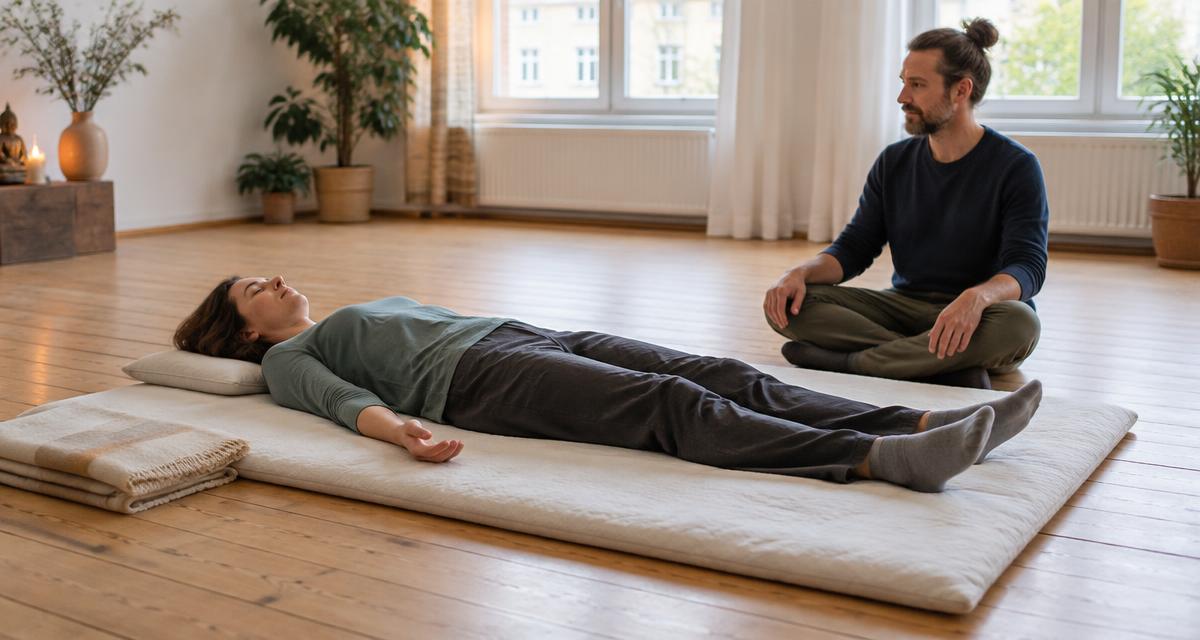
Holotropic Breathwork is an intensive group practice that combines faster, deeper breathing with evocative music, focused facilitation and time for integration. It was developed in the 1970s by psychiatrist Stanislav Grof and Christina Grof after psychedelic research became increasingly restricted. Their aim was to create a non-drug setting in which people could explore non-ordinary states of consciousness.
The word holotropic comes from Greek roots often translated as “moving toward wholeness.” It describes the founders' framework, not a guaranteed outcome. Experiences vary widely: some people report strong physical sensations, emotions, memories or imagery, while others experience quietness, discomfort or little that feels unusual.
Where Holotropic Breathwork Comes From
Stanislav Grof studied altered states during early clinical psychedelic research. Together with Christina Grof, he later developed a structured workshop format using breath, music, paired support and integration. The official method is associated with specific training and facilitation standards; the broader term “holotropic-style breathwork” is sometimes used for related practices that are not part of that training lineage.
Holotropic Breathwork is informed by transpersonal psychology, a field concerned with experiences that may extend beyond an ordinary sense of self. That framework can be meaningful to participants, but it should not be confused with established medical evidence or a promise that a particular insight, memory or healing response will occur.
For more context from the founders, see the book Holotropic Breathwork by Stanislav & Christina Grof, which is also featured in my list of Top 10 books on breathwork. The book describes their approach and theoretical framework; it is not a substitute for screening or qualified facilitation.
What Happens in a Session?
Sessions usually take place in groups and are longer than most modern studio breathwork classes. Participants often work in pairs, alternating between two roles:
- Breather: lies on a mat, follows their own continuous breathing rhythm and remains responsible for communicating boundaries.
- Sitter: stays nearby, protects the physical space and offers practical support without directing or interpreting the experience.
After preparation and safety screening, the active phase commonly lasts two to three hours. Music moves through a deliberate arc, often from rhythmic and activating pieces toward more spacious or quiet music. Facilitators observe the room and may offer support; any touch or bodywork should require clear consent. Rest, drawing, journaling or group sharing may follow.
How the Breathing Works
There is no single prescribed tempo. Participants are generally invited to breathe more deeply and quickly than usual, continuously and without long pauses. This sustained high ventilation lowers carbon dioxide in the blood and can change pH, cerebral blood flow and nerve excitability. Tingling, light-headedness, temperature shifts and temporary muscle tightening can result from this physiology.
These changes can feel intense and may influence attention, emotion and perception. Research into high-ventilation breathwork is developing, but it does not yet support certainty about therapeutic effects or explain every subjective experience. Read the science of high-ventilation breathwork and respiratory alkalosis for more detail.
What Might You Experience?
People describe a broad range of responses, including strong emotion, changes in body sensation, vivid imagery, autobiographical memories, a softened sense of time or self, and deep rest afterwards. These are possibilities, not goals. An intense experience is not automatically more useful than a quiet one, and a memory or image that appears during an altered state should not automatically be treated as literal fact.
A well-held session leaves room to slow down, stop, open the eyes or ask for support. Nothing needs to be achieved or performed.
Holotropic Breathwork vs. Rebirthing Breathwork
Both use conscious connected breathing, but their settings and pace usually differ. Holotropic Breathwork is commonly a long group workshop with strong music, paired sitters and a faster self-directed breath. Rebirthing Breathwork is often gentler, frequently offered one-to-one, and places more emphasis on a relaxed exhale and direct guidance.
Neither method is psychotherapy simply because emotional material may arise. Breathwork can be used for self-exploration and wellbeing, but it does not diagnose or treat mental-health conditions and should not replace appropriate medical or psychological care. The guide to breathwork vs. therapy explains this boundary in more detail.
Safety and Contraindications
Holotropic Breathwork is a high-ventilation practice with real physiological effects and is not suitable for everyone. Important reasons to seek medical advice or avoid the practice include cardiovascular disease, uncontrolled high blood pressure, aneurysm, epilepsy or seizure history, glaucoma or retinal detachment, recent surgery or injury, pregnancy, and some psychiatric conditions or periods of acute instability.
Screening and qualified facilitation matter. Never practise intense connected breathing in water, while driving, standing in an unsafe place or anywhere a change in awareness could cause harm. Read the full contraindications guide before considering a session.
Finding a Session
Ask about the facilitator's training, screening process, consent policy, emergency planning, group size, sitter instructions and integration support. A responsible facilitator should welcome questions and make it easy to opt out of touch, slow the breath or stop.
Breath & Chill currently offers guided Rebirthing Breathwork rather than the Holotropic Breathwork method. If you want to explore connected breathing in Berlin, see our upcoming group sessions.
Frequently Asked Questions
Is Holotropic Breathwork the same as hyperventilation?
It deliberately uses sustained high ventilation, which lowers carbon dioxide and can create noticeable physical effects. Unlike involuntary panic breathing, the practice is intentional and time-limited, but that does not remove its risks or contraindications.
How long does a Holotropic Breathwork session last?
The active breathing commonly lasts two to three hours, with preparation and integration making the full workshop longer. Formats vary by facilitator and training organization.
Can I do Holotropic Breathwork alone?
No. Its intensity and duration make screening, a safe physical setting and trained support important. Beginners should not attempt an intensive version alone or follow an online recording without appropriate assessment and supervision.
Is Holotropic Breathwork therapy?
It originated within a transpersonal psychological framework, but participating in a breathwork workshop is not the same as receiving psychotherapy from a licensed professional. It should not be presented as a treatment or substitute for mental-health care.
Is Holotropic Breathwork a psychedelic experience?
Many people describe changes in perception during the practice that feel similar to those reported with psychedelics — vivid imagery, strong emotion and a softened sense of self, while some do not. These states are reached through breathing alone, without any substances, and the practice is self-regulating: you can slow down or stop at any time. Similarity in reported experience does not make the practices biologically or clinically identical. Read breathwork and psychedelics for a closer comparison.
What is the difference between Holotropic and Rebirthing Breathwork?
Holotropic Breathwork is usually longer, faster and group-based, with music and paired sitters. Rebirthing is typically gentler, often one-to-one and guided with emphasis on a relaxed, connected breath.
Curious to experience Breathwork for yourself?
Take the private 2-minute check to see whether breathwork may be suitable for you right now.
Explore the next Breathwork Group Sessions in Berlin and find a date that works for you.
Talk with me for 15 minutes, without obligation, and explore which kind of support may fit you.
Breath & Chill Newsletter
Occasional updates on upcoming Events, new Breathwork Blog Articles and gentle reminders to take a deep breath. No spam, unsubscribe anytime.