12 JULY 2026·3 MIN READ
Trance Dance: Movement as Medicine
While modern society often views dancing strictly as a social activity or a form of entertainment, humanity’s oldest relationship with dance was profoundly spiritual. For thousands of years, indigenous cultures across the globe used rhythmic, uninhibited movement to enter altered states of consciousness — seeking healing, clarity, and connection to the divine. Today, the contemporary practice of Trance Dance revives these ancient shamanic roots, adapting them into a powerful modern ritual for somatic release and self-discovery.
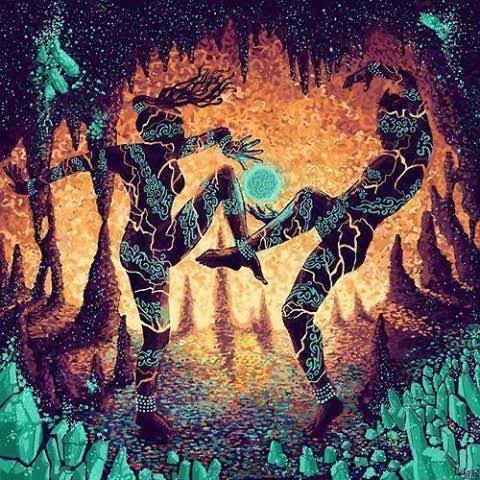
What is Trance Dance?
Trance Dance is a blindfolded, free-form movement meditation. Unlike traditional dance classes, there are no steps to learn, no choreography to memorize, and absolutely no aesthetic standards to meet. The practice blends three core elements to help participants drop out of their thinking minds and tap into their instinctual, bodily wisdom.
- The Bandana (Blindfold): By eliminating visual stimuli, the outer world disappears. This shuts off the inner critic, removes the fear of judgment from others, and shifts the dancer’s attention entirely inward.
- Intentional Breathwork: A specific breathing technique — often an active, continuous breath through the mouth — is used at the beginning to charge the body with energy and alter brainwave states.
- Rhythmic Sonic Landscapes: The journey is driven by highly intentional music, typically starting with primal, repetitive acoustic drumming, transitioning into driving electronic rhythms, and ending in deep, integrative ambient stillness.
The Anatomy of a Modern Ritual:
A typical Trance Dance session functions as a structured journey, guiding participants safely into the subconscious and back.
- Setting the Intent & Entering Darkness (10–15 minutes): The session begins with a grounding circle where dancers form a clear internal intention or question. Participants then put on their blindfolds, closing off the visual world to prepare the nervous system for an inward shift.
- Igniting the Fire — Breathwork (5–10 minutes): Dancers stand in place and begin a rhythmic breath cycle. This floods the body with oxygen and life-force energy, elevating the internal temperature and breaking down the initial physical tension or mental resistance.
- The Free-Form Journey (45–60 minutes): As the percussive music builds, the body begins to move spontaneously. Without visual markers, dancers sway, shake, jump, or crawl. The movement becomes a dynamic meditation where stored physical tension and emotional blocks are shaken loose and expressed through the body.
- Stillness and Integration (15–20 minutes): The music slows to a gentle murmur. Dancers lay down on mats to let the body rest. In this profound quiet, the nervous system recalibrates, the heart rate drops, and the insights or emotional releases from the dance are fully integrated.
Why Trance Dance is a Profound Healing Tool:
In our highly cerebral culture, we tend to process everything through analysis. Trance Dance offers an alternative route: body-led liberation. When you dance completely in the dark, your ego goes offline. The mind stops worrying about how the body looks and instead surrenders to how the body feels. This state allows the brain to move from active Beta waves into deeper Alpha and Theta brainwave states — the same frequencies achieved during deep meditation or dreaming.
In this space, the body naturally knows how to heal itself. It shakes out stress, releases suppressed emotional energy like grief or anger, and reclaims a state of vibrant, authentic flow. It is a powerful reminder that sometimes, the best way to find clarity is to stop thinking and start moving.
Trance Dance and Rebirthing Breathwork:
Trance Dance pairs beautifully with Rebirthing Breathwork. Where breathwork clears the emotional and energetic channels from the inside out, dance completes the circuit by letting the body integrate and express what has been freed. Together, they form a complete practice of release and return.
Because similar to breathwork Trance Dance also induces altered states, the same medical limits apply. Please read about the contraindications for Rebirthing Breathwork before joining — especially in case of existent cardiovascular, neurological, psychiatric, eye or pregnancy-related conditions.
Curious to experience Breathwork for yourself?
Take the private 2-minute check to see whether breathwork may be suitable for you right now.
Explore the next Breathwork Group Sessions in Berlin and find a date that works for you.
Talk with me for 15 minutes, without obligation, and explore which kind of support may fit you.
Breath & Chill Newsletter
Occasional updates on upcoming Events, new Breathwork Blog Articles and gentle reminders to take a deep breath. No spam, unsubscribe anytime.